


Playgrounds have always been the heart of childhood fun, laughter, and creativity. Whether during school recess, after-class breaks, or weekend gatherings, the games played on playgrounds create some of the most cherished memories for kids.
From timeless classics like Freeze Tag and Hopscotch to newer, imaginative twists invented on the spot, playground games not only keep children active but also teach important social skills like teamwork, communication, and fair play.
In this ultimate list of 100 school playground games, we’ve rounded up a wide variety of activities that require little to no equipment, making them perfect for teachers, parents, and kids alike.
Whether you’re planning activities for a large group or looking for quick ideas to energize a small gathering, you’ll find plenty of inspiration here to get kids moving and smiling. Let’s dive into the fun and rediscover the joy of simple, screen-free play!
Objective: Avoid being tagged and frozen by the tagger.
Players: 4 or more; ideal with 6–12.
Equipment: None
Setup: Choose a wide, safe play area. Assign one child to be the tagger.
How to Play: The tagger chases others. If a player is tagged, they must freeze in place. Other players can “unfreeze” them by tagging them. The game ends when everyone is frozen or after a set time.
Variation: Appoint a “doctor” who is the only player allowed to unfreeze others.
Safety Tip: Choose a grassy area to minimize injury from falls.
Objective: Tag players by stepping on their shadow.
Players: 4 or more; works best on sunny days.
Equipment: None
Setup: Play in an open outdoor space with direct sunlight. One player is the tagger.
How to Play: The tagger tries to step on other players’ shadows. When successful, the tagged player becomes the new tagger.
Variation: Tagged players must freeze instead of switching roles.
Safety Tip: Avoid uneven ground where kids might trip while running.
Objective: Freeze others by tagging; unfreeze by crawling through their legs.
Players: 6 or more; best with 8–15.
Equipment: None
Setup: Set up an open space and assign a tagger.
How to Play: Tagged players stand still with their legs apart. To be freed, another player must crawl through their legs. The game continues until everyone is frozen or time runs out.
Variation: Have two taggers for a faster-paced game.
Safety Tip: Ensure the ground is soft to protect kids during crawling.
Objective: Avoid the growing “blob” of taggers.
Players: 6 or more; ideal with 10–20.
Equipment: None
Setup: One player begins as the blob. The rest scatter in the play area.
How to Play: When tagged, players join hands with the blob, forming a larger group that continues tagging others. The game ends when everyone is part of the blob.
Variation: Limit each blob to 4 players, then start new blobs for more challenge.
Safety Tip: Move slowly when linked to avoid tripping.
Objective: Avoid being tagged by yelling the name of a TV show.
Players: 5 or more.
Equipment: None
Setup: Choose one tagger. Players spread out in the play zone.
How to Play: If a player is about to be tagged, they can yell out a TV show name and freeze. Another player must unfreeze them by tagging. Repeated show names aren’t allowed.
Variation: Switch to movie titles, cartoon names, or video games.
Safety Tip: Keep the action area clear to avoid collisions.
Objective: Build a chain of taggers by linking hands.
Players: 6 or more; better with 10+.
Equipment: None
Setup: One player is chosen as the initial tagger.
How to Play: Each time a player is tagged, they join the chain by holding hands. The chain grows and works together to tag others. The last player tagged is the winner.
Variation: Let chains split into two smaller chains after they reach four players.
Safety Tip: Emphasize teamwork and moving cautiously while linked.
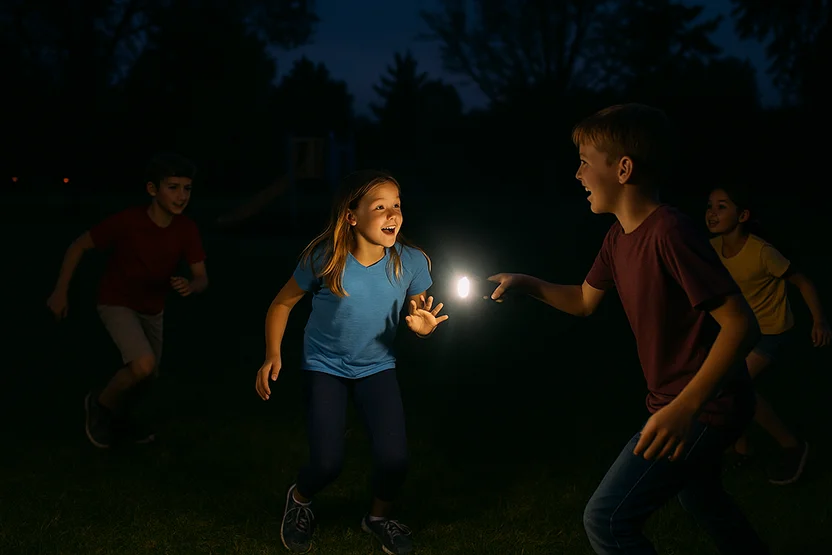
Objective: Avoid being seen by the flashlight beam.
Players: 4 or more; ideal for dusk or night.
Equipment: One flashlight
Setup: Select a safe, dark play area. One player gets the flashlight.
How to Play: The tagger uses the flashlight to “tag” others by shining the beam on them and calling their name. Those tagged are out.
Variation: Add hiding spots and walkie-talkies for more suspense.
Safety Tip: Use a flat, open area to avoid tripping in the dark.
Objective: Avoid becoming a zombie.
Players: 6 or more.
Equipment: None
Setup: One child starts as the zombie.
How to Play: The zombie tags others by slowly walking (no running). Tagged players become zombies. Game ends when one person remains untagged.
Variation: Make zombies walk with stiff arms and groan for fun!
Safety Tip: Slow movements make this version great for mixed ages.
Objective: Stay free and untagged.
Players: 6 or more.
Equipment: None
Setup: One player is the tagger. The others spread out.
How to Play: Tagged players freeze with their legs wide apart. Other players can unfreeze them by crawling through their legs. Play ends when all are stuck.
Variation: Only certain players (e.g. designated “freezers”) can rescue others.
Safety Tip: Teach players to crawl carefully and slowly.
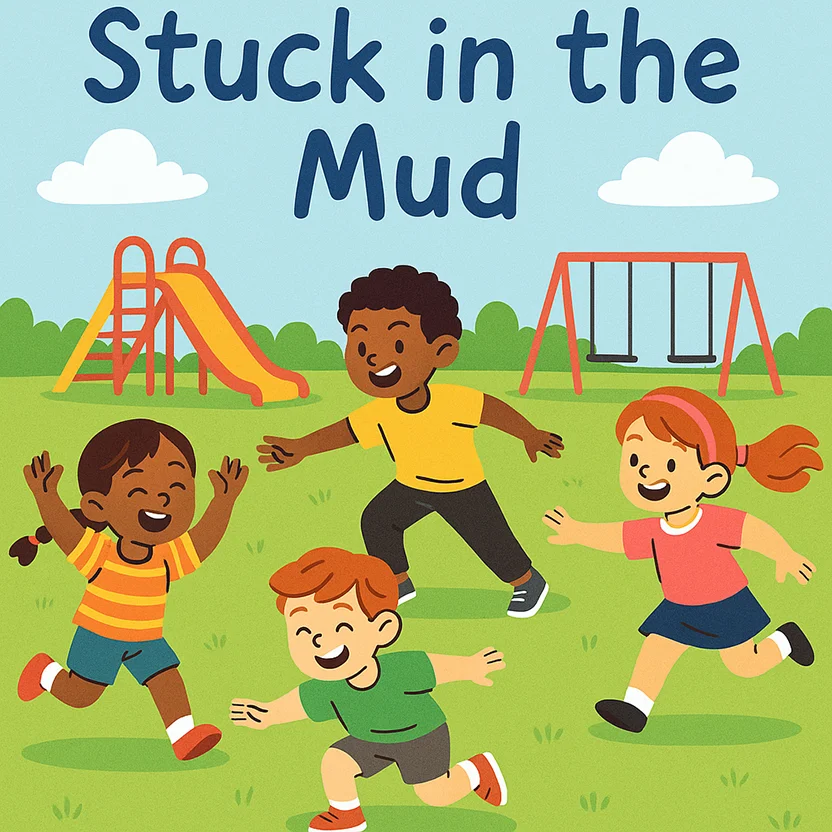
Objective: Cross the field without getting tagged.
Players: 6 or more.
Equipment: None
Setup: One player is the “octopus” in the center. Others line up on one side.
How to Play: On “go,” everyone tries to run to the other side. Those tagged become “seaweed” and must freeze, tagging others as they run by. The last player untagged wins and becomes the octopus next round.
Variation: Allow seaweed players to move their arms but not their feet.
Safety Tip: Remind kids not to tag too forcefully.
Objective: Be the first to reach the caller without getting caught moving on “Red Light.”
Number of Players: 4+; best with 6–15 players.
Equipment Needed: None
Setup: Mark a starting line and a finish line. One player is the caller and stands at the finish line, facing away from the others.
How to Play: Players line up behind the starting line. When the caller shouts “Green Light,” players move toward them. When “Red Light” is called, they must stop immediately. Anyone caught moving goes back to the start. The first player to reach the caller wins.
Variations: Use traffic light props or color signs for added fun.
Tips & Safety Notes: Make sure players stop safely and don’t run into others.
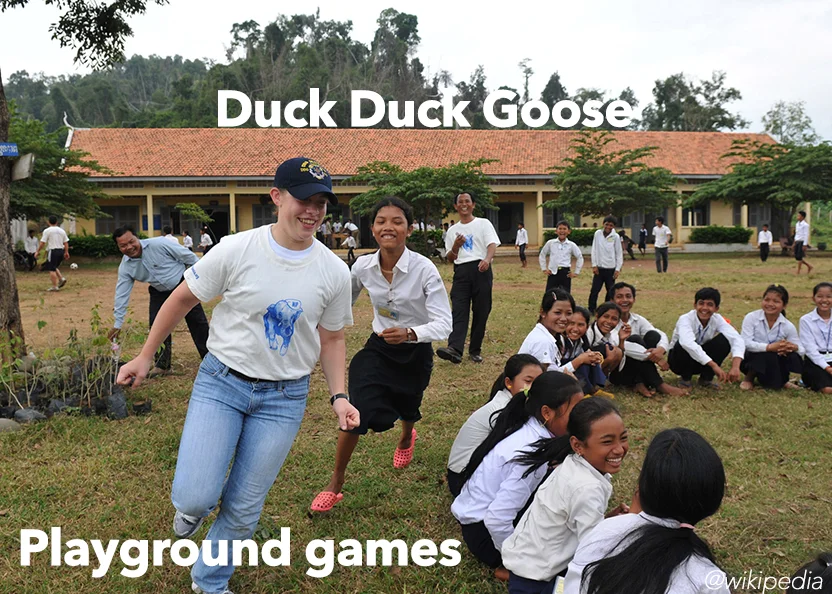
Objective: Avoid getting caught while running around the circle.
Number of Players: 6+; best with 8–20 players.
Equipment Needed: None
Setup: Players sit in a circle. One player is “it” and walks around the outside.
How to Play: “It” taps each player’s head saying “duck.” When they say “goose,” the tapped player must jump up and chase “it” around the circle. If “it” sits in the goose’s spot before being tagged, the goose becomes the new “it.”
Variations: Try with different animal names or themes.
Tips & Safety Notes: Keep the running area clear to prevent falls.
Objective: Sneak up on the “wolf” and be the first to tag them.
Number of Players: 5+; ideal with 6–12.
Equipment Needed: None
Setup: One player (Mr. Wolf) stands at one end of the play area, back turned. Others line up at the opposite end.
How to Play: Players call out “What’s the time, Mr. Wolf?” Mr. Wolf responds with a time (e.g., “3 o’clock”), and players take that many steps forward. If Mr. Wolf says “It’s dinnertime!” they turn and chase the others. Whoever is tagged becomes the new wolf.
Variations: Have Mr. Wolf wear a wolf mask for added drama.
Tips & Safety Notes: Use a soft surface and reinforce no pushing or shoving.
Objective: Cross the play area without being tagged by the shark.
Number of Players: 6+; best with 10–20.
Equipment Needed: None
Setup: Mark boundaries for the playing area. One player starts as the shark in the center.
How to Play: Players (the minnows) line up on one side. On “go,” they run across while the shark tries to tag them. Tagged players become additional sharks. Last minnow standing wins.
Variations: Add safe zones or special “power-up” areas.
Tips & Safety Notes: Make sure the play zone is wide and free of obstacles.
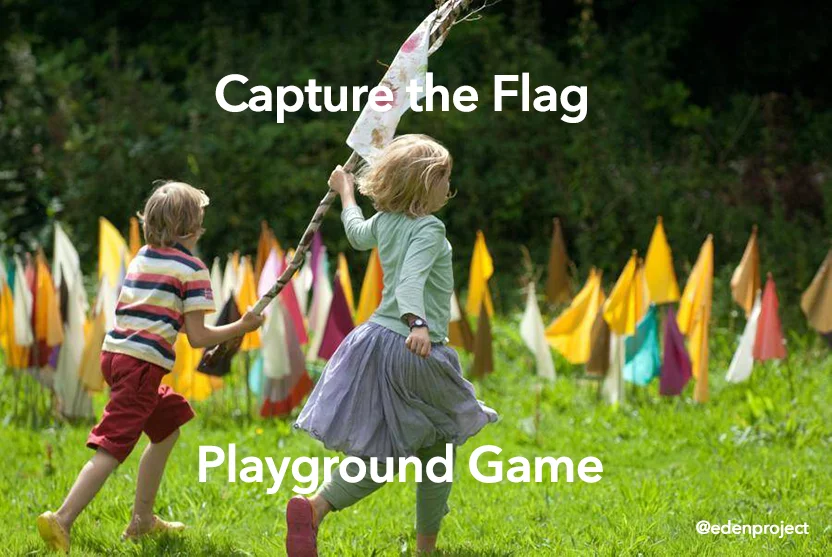
Objective: Retrieve the opposing team’s flag and bring it back to your base.
Number of Players: 8+; best with 10–20 split into teams.
Equipment Needed: 2 flags (or bandanas, cones)
Setup: Divide the play area into two zones, one for each team. Place flags in the back of each territory.
How to Play: Players attempt to cross into enemy territory to grab the flag without being tagged. Tagged players go to “jail.” Teammates can free them by tagging. First team to bring back the flag wins.
Variations: Add multiple flags or power zones.
Tips & Safety Notes: Set clear boundaries and rules to avoid conflict.
Objective: Cross the field without getting caught by the bulldogs.
Number of Players: 8+; works best with 12–20.
Equipment Needed: None
Setup: One or two players start in the middle. The rest line up at one side of the field.
How to Play: Players attempt to run to the other side. Bulldogs try to tag them. Tagged players become additional bulldogs. The last player left wins.
Variations: Add “safe zones” in the middle.
Tips & Safety Notes: Use this game with older kids only and watch for rough play.
Objective: Grab the “bacon” and return to your team without getting tagged.
Number of Players: 8+; split into two teams.
Equipment Needed: 1 object (the “bacon,” e.g., a beanbag)
Setup: Teams line up on opposite sides. Place the bacon in the middle.
How to Play: Each player gets a number. When a number is called, those players run to grab the bacon. The player who gets it tries to return to their team without being tagged.
Variations: Call multiple numbers at once.
Tips & Safety Notes: Stress safe tagging only—no diving or tackling.
Objective: The cat tries to catch the mouse through an obstacle of players.
Number of Players: 8+; better with 10–15.
Equipment Needed: None
Setup: Players form a circle holding hands. Choose a cat and a mouse.
How to Play: The mouse tries to run in and out of the circle while being chased by the cat. The circle players raise or lower hands to help or block.
Variations: Add more cats and mice for added chaos!
Tips & Safety Notes: Make sure everyone understands how to play safely in a circle.
Objective: The fox tries to evade the hound in a game of chase.
Number of Players: 4+; best with 6–10.
Equipment Needed: None
Setup: Choose one fox and one hound. The rest can be spectators or join in.
How to Play: The fox gets a head start. The hound chases. Once caught, switch roles.
Variations: Add multiple foxes and hounds.
Tips & Safety Notes: Use this for younger kids as a simple warm-up.
Objective: Follow commands correctly and avoid being the last to act.
Number of Players: 6+; ideal with 10–20.
Equipment Needed: None
Setup: Choose one caller. Players stand in a line facing the caller.
How to Play: The caller gives commands like “ship” (run right), “shore” (run left), “deck” (sit down), or “captain’s coming” (salute). Players must act fast. Last to respond is out.
Variations: Add silly or custom commands.
Tips & Safety Notes: Use a grassy area to prevent falls during fast movements.
Objective: Eliminate opposing players by hitting them with a ball while avoiding being hit yourself.
Number of Players: 6+; best with teams of 4–10.
Equipment Needed: Soft foam dodgeballs, cones to mark boundaries.
Setup: Divide players into two teams and set up boundaries with a center line.
How to Play: Teams start on opposite sides. Players throw balls to hit opponents below the shoulders. Hit players are out. Catching a ball eliminates the thrower and brings a teammate back in. Last team with players wins.
Variations: “Doctor Dodgeball” allows one player to revive others.
Tips & Safety Notes: Use soft balls and monitor aggressive throws.
Objective: Score runs by kicking a ball and running bases, similar to baseball.
Number of Players: 8+; two teams.
Equipment Needed: Kickball, bases (cones or markers).
Setup: Set up a diamond-shaped field with four bases.
How to Play: One team kicks, the other fields. Kickers run bases to score runs. Fielders get players out by catching the ball or tagging them. After 3 outs, teams switch. Most runs win.
Variations: Use larger teams or different kicking rules.
Tips & Safety Notes: Play on a soft surface and enforce gentle tagging.
Objective: Bounce the ball off a wall and avoid being tagged or missing a catch.
Number of Players: 2+; best with 3–6.
Equipment Needed: Rubber ball, flat wall.
Setup: Choose a wall and mark a play area.
How to Play: A player throws the ball against the wall. Others must catch it or hit it again. Misses result in outs. Last player standing wins.
Variations: Add “pegging” or catching bonuses.
Tips & Safety Notes: Watch out for hard throws near faces.
Objective: Advance to square 1 and stay in as long as possible.
Number of Players: 4+; great with rotations.
Equipment Needed: Playground ball, chalk to mark squares.
Setup: Draw four connected squares labeled 1 to 4.
How to Play: Players bounce the ball into others’ squares. If a player misses, they’re out and rotate out. Everyone moves up. Square 1 serves.
Variations: Use rules like “cherry bombs” or “double taps.”
Tips & Safety Notes: Use soft balls and enforce respectful play.
Objective: Avoid holding the “potato” when the music stops.
Number of Players: 4+; ideal for 6–10.
Equipment Needed: Small ball or object, music player.
Setup: Players sit in a circle.
How to Play: Pass the “potato” while music plays. When music stops randomly, the person holding the object is out. Last one left wins.
Variations: Use a timer instead of music.
Tips & Safety Notes: Ensure all players get a fair chance to pass.
Objective: Keep the ball away from the player in the middle.
Number of Players: 3+; best with 4–6.
Equipment Needed: Soft ball
Setup: One player stands in the middle of a circle or line.
How to Play: Outer players pass the ball to each other. The “monkey” in the middle tries to intercept. If they do, the passer becomes the monkey.
Variations: Add time limits or multiple monkeys.
Tips & Safety Notes: Encourage inclusive passing.
Objective: Be the last player remaining in a basketball shoot-out.
Number of Players: 3+; best with 4–8.
Equipment Needed: Basketball hoop, 2 basketballs.
Setup: Players line up. First two have balls.
How to Play: First shoots. If they miss, the second can eliminate them by scoring first. If not eliminated, the first passes the ball back and rejoins the line.
Variations: Add dribbling or long-shot rounds.
Tips & Safety Notes: Keep a safe space between shooters.
Objective: Score points by passing a soccer ball over a net and keeping it in bounds.
Number of Players: 2–4
Equipment Needed: Soccer ball, rope/net, cones for court.
Setup: Set up a small court with a midline/net.
How to Play: Players kick or head the ball over the net. Ball must bounce once. First to reach a set score wins.
Variations: Use only headers or feet.
Tips & Safety Notes: Use soft balls and enforce fair play.
Objective: Wrap the ball completely around the pole in your direction.
Number of Players: 2
Equipment Needed: Tetherball pole, tetherball
Setup: Set up pole in a clear, open space.
How to Play: Players hit the ball in opposite directions. Goal is to wrap it fully around the pole without the other reversing it.
Variations: Allow only one hand or slap-hits.
Tips & Safety Notes: Keep an eye on swinging ropes near faces.
Objective: Hit the ball against the wall within the boundary and avoid being “out.”
Number of Players: 2+; best with 4–8.
Equipment Needed: Bouncy ball, wall.
Setup: Mark wall boundaries and player zones.
How to Play: Players take turns bouncing the ball off the wall. If someone misses or double-hits, they’re out. Last one remaining wins.
Variations: Add “cherry bombs” or speed rounds.
Tips & Safety Notes: Ensure proper spacing and no rough play.
Objective: Be the first to return to the spot without being tagged.
Number of Players: 6+; best with 8–12
Equipment Needed: None
Setup: Players sit in a circle on the ground.
How to Play: One player walks around the outside of the circle tapping heads while saying “duck, duck…” until choosing one person to be the “goose.” The goose must chase the tagger around the circle. If the tagger sits in the empty spot before being tagged, the goose becomes the new tagger.
Variations: Use fun phrases instead of “duck” and “goose,” like “cat/cow.”
Tips & Safety Notes: Ensure a clear space to run; no pushing.
Objective: Unwrap a parcel to win a prize as music stops.
Number of Players: 4+; best with 6–10
Equipment Needed: Parcel with multiple wrapped layers, music player
Setup: Players sit in a circle; parcel starts with one player.
How to Play: Music plays while players pass the parcel. When it stops, the player holding it removes one layer. Repeat until the last layer reveals the prize.
Variations: Add small treats between layers.
Tips & Safety Notes: Ensure fair music stops; an adult should control it.
Objective: Avoid being left without a seat.
Number of Players: 5+; best with 6–12
Equipment Needed: Chairs (one fewer than players)
Setup: Arrange chairs in a circle.
How to Play: Assign fruit names to players (e.g., apple, banana, pear). One player stands in the middle and calls a fruit; those players switch seats. If “fruit salad” is called, everyone moves. The middle player tries to sit. Left-out player is the new caller.
Variations: Use categories like colors or animals.
Tips & Safety Notes: Ensure chairs are safe and spaced properly.
Objective: Be the first to grab a seat after a statement.
Number of Players: 6+; best with 8–16
Equipment Needed: Chairs (one fewer than players)
Setup: Arrange chairs in a circle.
How to Play: One person stands in the center and says, “The wind blows for anyone who…” (e.g., wears glasses). Those players must switch seats. The middle player tries to claim one. The player left standing goes next.
Variations: Use silly or creative statements.
Tips & Safety Notes: Keep an eye out for tripping.
Objective: Detect the murderer before being “killed.”
Number of Players: 6+; ideal with 8–14
Equipment Needed: None
Setup: Players sit in a circle; one secretly chosen as the “murderer.”
How to Play: The murderer eliminates players by winking. Victims silently count to 5 and then “die” dramatically. A detective (optional) must guess the killer. The game ends when the killer is caught.
Variations: Use finger guns or other silent signals.
Tips & Safety Notes: Avoid making eye contact too long to keep suspicion low.
Objective: Guess who has the hidden button.
Number of Players: 4+; ideal with 6–12
Equipment Needed: Small object like a button
Setup: Players sit in a circle with hands out.
How to Play: One player walks around pretending to drop a button into each hand, actually leaving it with one player. Then asks, “Button, button, who’s got the button?” and selects who they think has it.
Variations: Use other small objects like coins.
Tips & Safety Notes: Keep hands closed until guessed.
Objective: Guess the object the spy sees.
Number of Players: 2+; best with small groups
Equipment Needed: None
Setup: Choose a space with visible items.
How to Play: One player says, “I spy with my little eye something beginning with [letter].” Others guess until someone finds the correct object.
Variations: Use color or shape clues instead of letters.
Tips & Safety Notes: Choose objects that are clearly visible to all.
Objective: Follow only commands prefaced with “Simon says.”
Number of Players: 3+; ideal with 5–10
Equipment Needed: None
Setup: Players face the leader (Simon).
How to Play: Simon gives commands (e.g., jump, spin). Only follow if “Simon says” is spoken first. If not and you act, you’re out.
Variations: Rotate who plays Simon.
Tips & Safety Notes: Emphasize listening and attention.
Objective: Pass a whispered message around the circle accurately.
Number of Players: 4+; best with 6–10
Equipment Needed: None
Setup: Players sit in a line or circle.
How to Play: One player whispers a sentence to the next. Each passes it on. The last player says it aloud. Compare with the original.
Variations: Use silly phrases for funnier results.
Tips & Safety Notes: Speak quietly but clearly to avoid shouting.
Objective: Follow rhythmic clapping patterns and words.
Number of Players: 2+; best with partners
Equipment Needed: None
Setup: Players face each other.
How to Play: Players chant rhymes while clapping in patterns (e.g., pat own hands, partner’s, etc.). Often used for coordination and rhythm.
Variations: Use songs like “Miss Mary Mack.”
Tips & Safety Notes: Keep tempo slow for beginners.
Objective: Be the first to reach the finish line while hopping in a sack.
Number of Players: 4+ players
Equipment Needed: Burlap sacks or large pillowcases
Setup: Mark a start and finish line in an open area. Give each player a sack.
How to Play: Players stand in sacks at the starting line. At the signal, they hop toward the finish line. The first one across wins.
Variations: Try relay-style races where players tag teammates to hop next.
Tips & Safety Notes: Ensure the race path is free of holes and sharp objects to prevent falls.
Objective: Be the first pair to reach the finish line while tied together.
Number of Players: 4+ (in pairs)
Equipment Needed: Cloth strips or soft rope to tie legs
Setup: Divide players into pairs and tie one of each pair’s legs together.
How to Play: Teams start at the line and race to the finish while coordinating their steps.
Variations: Include obstacles for added challenge.
Tips & Safety Notes: Don’t tie legs too tightly; use soft materials to avoid discomfort.
Objective: Reach the finish line first without dropping your egg.
Number of Players: 4+
Equipment Needed: Spoons and hard-boiled eggs (or plastic alternatives)
Setup: Each player is given a spoon and egg; a start and finish line are marked.
How to Play: Players balance eggs on spoons and walk or run to the finish line.
Variations: Use raw eggs for more difficulty.
Tips & Safety Notes: Avoid running fast to prevent slips; use fake eggs indoors.
Objective: Be the first team to cross the finish line.
Number of Players: 4+ (in pairs)
Equipment Needed: None
Setup: Pairs decide who will be the “wheelbarrow” (walking on hands) and who will hold their legs.
How to Play: On the signal, pairs race to the finish line. Switch roles and repeat if doing a relay.
Variations: Add obstacles or a slalom course.
Tips & Safety Notes: Choose even surfaces and pair players by similar height/strength.
Objective: Be the fastest team to pass the baton through all players.
Number of Players: 8+ (teams of 4 or more)
Equipment Needed: Batons (can be sticks or rolled paper)
Setup: Divide players into teams. Set lanes and start/finish lines.
How to Play: Each player runs their leg and passes the baton to the next teammate.
Variations: Add a twist like running backwards or skipping.
Tips & Safety Notes: Practice smooth baton handoffs to prevent dropping.
Objective: Reach the end by leapfrogging over your teammate.
Number of Players: 4+ (pairs or small teams)
Equipment Needed: None
Setup: Players line up in pairs. One kneels, the other prepares to leap.
How to Play: The standing player leaps over the kneeler and drops to a kneel, repeating until finish.
Variations: Add a relay element with multiple pairs.
Tips & Safety Notes: Supervise younger kids closely to avoid jumping accidents.
Objective: Race to the finish line while crab-walking.
Number of Players: 4+
Equipment Needed: None
Setup: Players sit and lift themselves into crab position (hands and feet on the ground, stomach up).
How to Play: On signal, they crab-walk to the finish line.
Variations: Add cones to zigzag around.
Tips & Safety Notes: Encourage steady pace; avoid overexertion.
Objective: Reach the finish line while running backwards.
Number of Players: 4+
Equipment Needed: None
Setup: Mark start and finish lines with cones.
How to Play: Players line up and run backwards to the end line.
Variations: Have teams do a relay version.
Tips & Safety Notes: Choose a flat, open area; ensure children look over shoulders occasionally.
Objective: Be the fastest to complete the course.
Number of Players: Any number
Equipment Needed: Cones, hoops, ropes, tunnels, etc.
Setup: Arrange obstacles in a sequence based on age and ability.
How to Play: Each player must complete the course as quickly as possible.
Variations: Time each player or have teams race.
Tips & Safety Notes: Supervise closely; ensure all obstacles are safe and secure.
Objective: Pop balloons by sitting on them in a relay format.
Number of Players: 6+ (teams)
Equipment Needed: Balloons
Setup: Line teams up. Place inflated balloons at a distance.
How to Play: Players run to the balloon, sit to pop it, then return to tag next teammate.
Variations: Include challenges like hopping or spinning before reaching the balloon.
Tips & Safety Notes: Use soft ground to avoid injury when sitting quickly.
Objective: Keep small balls or beanbags bouncing on the parachute without letting them fall off.
Number of Players: 6+ players; best with 8–16.
Equipment Needed: One large parachute; several soft balls or beanbags.
Setup: Have all players hold the edge of the parachute, standing in a circle. Place the balls or beanbags on top of the parachute.
How to Play: On the count of three, players begin shaking the parachute to make the balls pop like popcorn. The goal is to keep the items bouncing as long as possible without falling off.
Variations: Add a timer and see how long players can keep all items on the parachute.
Tips & Safety Notes: Make sure players do not pull the parachute too high or too low to avoid sudden jerks.
Objective: Create a mushroom-shaped dome by lifting the parachute up and stepping underneath.
Number of Players: 6+ players; works best with 10 or more.
Equipment Needed: One large parachute.
Setup: All players stand in a circle holding the parachute.
How to Play: Players lift the parachute high above their heads simultaneously, then take one or two steps forward and sit down, trapping air underneath to form a mushroom dome.
Variations: Try naming the mushroom or adding a short story to make the game more imaginative.
Tips & Safety Notes: Players should watch their footing and avoid stepping on the parachute to prevent tripping.
Objective: The “mouse” tries to escape from the “cat” crawling on top of the parachute.
Number of Players: 6+ players; best with 8–14.
Equipment Needed: One large parachute.
Setup: Players form a circle and hold the parachute. One child (the mouse) crawls underneath, another (the cat) crawls on top.
How to Play: Players wave the parachute to obscure the view of the mouse. The cat crawls around trying to tag the mouse, who must escape. Switch roles after each round.
Variations: Set a time limit or create safe zones where the mouse can rest briefly.
Tips & Safety Notes: Make sure the surface underneath is soft or grass-covered for safety.
Objective: Players must switch spots when their color is called without being tagged.
Number of Players: 6+ players.
Equipment Needed: Parachute with multicolored sections.
Setup: Each player stands on a color section of the parachute, holding the edge.
How to Play: The leader calls out a color. Anyone standing on that color must run under the parachute and switch places before it comes down. Add a tagger in the center for extra challenge.
Variations: Use shapes or numbers instead of colors.
Tips & Safety Notes: Players should not run too fast to avoid collisions.
Objective: Work together to roll a ball around the edge of the parachute.
Number of Players: 6+ players.
Equipment Needed: One large parachute; one lightweight ball.
Setup: Players hold the parachute in a circle.
How to Play: The ball is placed on the parachute. Players work together to tilt and guide the ball around the parachute’s edge without letting it fall off.
Variations: Time how fast the ball can complete a circle or add multiple balls.
Tips & Safety Notes: Keep movements slow and controlled for best results.
Objective: Tag designated players while everyone is under the parachute.
Number of Players: 8+ players.
Equipment Needed: One large parachute.
Setup: Players form a circle, holding the parachute.
How to Play: On command, players lift the parachute overhead and step underneath while pulling it down behind them. A tagger tries to tag others under the parachute. After each round, choose a new tagger.
Variations: Use multiple taggers or call out specific names.
Tips & Safety Notes: Ensure players move gently and avoid bumping heads.
Objective: Raise and lower the parachute like an umbrella while maintaining rhythm.
Number of Players: 6+ players.
Equipment Needed: One large parachute.
Setup: Players form a circle and hold the parachute.
How to Play: Players raise the parachute high and bring it back down slowly, keeping it taut and symmetrical. This helps build coordination and teamwork.
Variations: Add music to make it rhythmic.
Tips & Safety Notes: Encourage synchronized movement to avoid tugging.
Objective: Create different wave motions using the parachute.
Number of Players: 6+ players.
Equipment Needed: One large parachute.
Setup: Players hold the parachute in a circle.
How to Play: Leader calls out wave types (gentle waves, choppy waves, big waves), and players respond by moving the parachute accordingly.
Variations: Combine with story time or music.
Tips & Safety Notes: Keep the playing area clear.
Objective: Players trade places under the parachute when their color or name is called.
Number of Players: 6+ players.
Equipment Needed: One large parachute.
Setup: Players each stand at a parachute section.
How to Play: Leader calls two names or colors. Those players run under the parachute and switch places before it comes down.
Variations: Add challenges like hopping or crawling instead of running.
Tips & Safety Notes: Monitor player speed to avoid collisions.
Objective: Hide quietly under the parachute while it lays on the ground.
Number of Players: 6+ players.
Equipment Needed: One large parachute.
Setup: Spread the parachute flat on the ground. Players crawl under it from the edges.
How to Play: All players crawl under and lay still. The goal is to be quiet and hidden like turtles. Can also be used as a cool-down or calming activity.
Variations: Whisper a story or play calming music inside the “shell.”
Tips & Safety Notes: Supervise closely and ensure there is airflow and no overcrowding.
Objective: Encourage imaginative play and basic math skills by having kids role-play shopping and selling.
Number of Players: 2 or more; best with 3-6.
Equipment Needed: Play money, price tags, empty boxes or toy groceries, a table or boxes to form the “store.”
Setup: Designate an area as the store with goods displayed. Assign roles such as shopkeeper and customers.
How to Play: One child acts as the storekeeper while others are customers. Customers use play money to buy items, and the shopkeeper handles transactions. Players can switch roles.
Variations: Use real packaged goods or include a cashier with a toy register.
Tips & Safety Notes: Supervise younger children handling small items or coins.
Objective: Complete imaginative tasks while pretending to be superheroes.
Number of Players: 2+; ideal with 4-10.
Equipment Needed: Capes, masks, and printable mission cards (optional).
Setup: Create a mission area with small challenges like obstacle courses, item retrieval, or puzzles.
How to Play: Each child selects or is given a superhero identity and mission. They must work individually or in teams to complete their challenges.
Variations: Create villain characters to add an extra layer of excitement.
Tips & Safety Notes: Avoid physical challenges that are too difficult or involve sharp objects.
Objective: Go on a pretend jungle or safari adventure, spotting animals.
Number of Players: 2+; best with 3-10.
Equipment Needed: Stuffed animals, binoculars (real or cardboard), animal fact cards.
Setup: Hide toy animals around the play area. Create safari maps or clues for added engagement.
How to Play: Kids walk around with their binoculars and maps, trying to spot and identify as many animals as possible.
Variations: Make it a nighttime safari with flashlights or add sound effects.
Tips & Safety Notes: Ensure safe placement of animals to avoid tripping.
Objective: Complete secret missions while pretending to be secret agents.
Number of Players: 2 or more; best with 4-8.
Equipment Needed: Envelopes with clues, flashlights, toy walkie-talkies.
Setup: Set up stations with tasks or clues in different areas. Assign spy identities.
How to Play: Players follow the clues to complete missions, such as finding an object, decoding a message, or sneaking past a “laser field.”
Variations: Create teams of spies versus villains.
Tips & Safety Notes: Watch for children running indoors or bumping into furniture.
Objective: Find hidden objects or “treasure” using a series of clues.
Number of Players: 2+; ideal with 3-10.
Equipment Needed: Treasure (toys, treats), clue cards, map (optional).
Setup: Hide the treasure and create clues leading from one to the next.
How to Play: Kids read each clue to find the next location until they reach the treasure. Can be done individually or in teams.
Variations: Use riddles or puzzles as part of the clue-solving process.
Tips & Safety Notes: Avoid hiding clues in places that are unsafe or fragile.
Objective: Complete ninja-themed challenges to become a certified ninja.
Number of Players: 2+; ideal with 3-6.
Equipment Needed: Headbands, cones, hoops, beanbags.
Setup: Create a ninja obstacle course with challenges like crawling under tables, balancing on a line, or throwing beanbags.
How to Play: Each child completes the course. Add stealth tasks like sneaking silently or copying movements.
Variations: Give each ninja a rank or belt level to reach.
Tips & Safety Notes: Supervise active play to prevent collisions or injuries.
Objective: Simulate a camping trip with storytelling, pretend cooking, and exploration.
Number of Players: 2+; best with 3-8.
Equipment Needed: Tents or blankets, flashlights, sleeping bags, pretend campfire.
Setup: Set up a pretend campsite indoors or outdoors.
How to Play: Kids set up camp, tell stories, “cook” food, and go on pretend hikes.
Variations: Include scavenger hunts or sing-alongs.
Tips & Safety Notes: If outdoors, be mindful of bugs and weather; use battery-operated lights.
Objective: Simulate a dining experience with kids acting as chefs, waiters, and customers.
Number of Players: 2+; best with 4-8.
Equipment Needed: Play food, menus, notepads, utensils, and aprons.
Setup: Create a dining area with tables, and assign roles to the kids.
How to Play: Chefs prepare meals (real or pretend), waiters take orders, and customers dine. Roles can rotate.
Variations: Use real snacks or theme the restaurant (e.g., pizzeria).
Tips & Safety Notes: Ensure utensils used are safe and no real cooking is attempted without adult help.
Objective: Act out patient-doctor scenarios to learn empathy and healthcare roles.
Number of Players: 2+; ideal with 3-6.
Equipment Needed: Toy medical kits, beds (mats), patient charts.
Setup: Create a “hospital” area with beds, and assign roles of doctors, nurses, and patients.
How to Play: Doctors diagnose patients, write pretend prescriptions, and perform check-ups. Roles rotate.
Variations: Include an emergency room scenario with an ambulance.
Tips & Safety Notes: Keep activities gentle; use soft toys and tools only.
Objective: Solve a mystery using clues and logical thinking.
Number of Players: 2+; ideal with 3-10.
Equipment Needed: Clue cards, magnifying glass (real or toy), evidence (notes, items).
Setup: Create a mystery scenario with a backstory and scatter clues around.
How to Play: Players work alone or in teams to solve the mystery by analyzing clues and forming conclusions.
Variations: Make it themed (e.g., missing toy, cookie thief).
Tips & Safety Notes: Avoid hiding clues in unsafe or hard-to-reach places.
Objective: Navigate the hopscotch course without stepping on lines or missing numbers.
Number of Players: 1 or more; ideal with 2–6.
Equipment Needed: Chalk and a small object like a stone or beanbag.
Setup: Draw a hopscotch grid on the ground with chalk. Each square should be numbered.
How to Play: Players take turns tossing the object onto a number square. They then hop through the grid, skipping the square with the object. On the return trip, the player picks up the object while balancing on one foot. The game continues with the next number.
Variations: Try hopping on one foot the entire way or use themed drawings instead of numbers.
Tips & Safety Notes: Ensure the play area is flat and free of debris to prevent falls.
Objective: Jump over the rope without tripping while it is swung.
Number of Players: 1 or more; ideal with 2–4.
Equipment Needed: A jump rope.
Setup: Choose an open space and have one or two people swing the rope.
How to Play: One player jumps while the rope swings. Rhymes or songs can be used for timing. Players rotate when someone trips or misses.
Variations: Use double dutch ropes or see who can jump the most times in a row.
Tips & Safety Notes: Use a rope appropriate to the child’s height and keep the area clear.
Objective: Race while skipping to the finish line.
Number of Players: 2 or more; best with 3–8.
Equipment Needed: None.
Setup: Mark a start and finish line.
How to Play: Players line up and skip to the finish line on “Go!” The first one to reach the end wins.
Variations: Use backward skipping or hop-skipping for added challenge.
Tips & Safety Notes: Make sure the track is safe and clear of hazards.
Objective: Keep the hula hoop spinning as long as possible.
Number of Players: 1 or more; ideal with 2–6.
Equipment Needed: One hula hoop per player.
Setup: Provide each player with a hula hoop and clear enough space for movement.
How to Play: Players spin the hoop around their waist and try to keep it going. The last player still hooping wins.
Variations: Spin the hoop on arms, legs, or neck.
Tips & Safety Notes: Ensure enough room to avoid bumping into others.
Objective: Knock opponents’ marbles out of the circle while keeping your shooter marble inside.
Number of Players: 2 or more; best with 2–4.
Equipment Needed: A set of marbles and chalk to draw a circle.
Setup: Draw a circle and place marbles inside. Each player has a shooter marble.
How to Play: Players take turns flicking their shooter marble from outside the circle to hit and knock out other marbles. The player with the most marbles at the end wins.
Variations: Use different shapes or sizes of play zones.
Tips & Safety Notes: Avoid playing on hard surfaces where marbles could chip or bounce.
Objective: Pick up a set number of jacks between bounces of a ball.
Number of Players: 1 or more; ideal with 2–4.
Equipment Needed: A set of jacks and a small rubber ball.
Setup: Scatter the jacks on the ground.
How to Play: The player throws the ball up, picks up one jack, and catches the ball before it bounces again. The game continues with two jacks, three, and so on.
Variations: Use different throwing techniques or timed challenges.
Tips & Safety Notes: Make sure the floor is clean and free from small object hazards.
Objective: Create the most creative or detailed chalk drawing.
Number of Players: 1 or more; best with 3–10.
Equipment Needed: Sidewalk chalk.
Setup: Provide each child with a space to draw.
How to Play: Players create drawings within a time limit. A judge or group vote decides the winner based on creativity, color use, or theme.
Variations: Create a collaborative mural or themed art challenge.
Tips & Safety Notes: Use washable chalk and avoid slippery surfaces.
Objective: Pop as many bubbles as possible.
Number of Players: 1 or more; ideal with 2–6.
Equipment Needed: Bubble solution and wands or bubble machine.
Setup: Designate an open area for the activity.
How to Play: One person blows bubbles or uses a machine while others chase and pop them. Keep score or just play for fun.
Variations: Use colored bubbles or glow-in-the-dark bubbles.
Tips & Safety Notes: Be cautious of slippery surfaces caused by spilled bubble solution.
Objective: Find and collect a list of natural items.
Number of Players: 1 or more; best with 2–6.
Equipment Needed: Scavenger hunt list, bags or baskets.
Setup: Prepare a checklist of common natural items (leaf, acorn, feather) and set boundaries.
How to Play: Players explore the area to find all the items on their list. The first one to complete the list wins.
Variations: Make it photo-based instead of collecting items.
Tips & Safety Notes: Avoid picking protected plants or disturbing wildlife.
Objective: Score points by tossing beanbags into a target.
Number of Players: 1 or more; ideal with 2–6.
Equipment Needed: Beanbags and a board or buckets for targets.
Setup: Place the targets at a set distance and assign point values.
How to Play: Players take turns tossing the beanbags and add up their scores based on where the bags land.
Variations: Move the targets further back or use themed boards.
Tips & Safety Notes: Use soft beanbags and keep the area free of distractions or tripping hazards.
Objective: Be the first to win a set number of rounds by outsmarting your opponent’s hand gestures.
Number of Players: 2 players per round; can be played tournament-style with more.
Equipment Needed: None.
Setup: Players stand or sit facing each other.
How to Play: Players count to three aloud and simultaneously show one of three hand signs: rock (fist), paper (flat hand), or scissors (two fingers). Rock beats scissors, scissors beats paper, and paper beats rock. The winner of each round scores a point.
Variations: Play best-of-three matches or create a championship ladder with multiple players.
Tips & Safety Notes: Encourage fair play and avoid aggressive gestures.
Objective: Guess who tagged you while your head was down.
Number of Players: 8+; best with 10–30.
Equipment Needed: None.
Setup: Choose 3–5 players to be “it.” Remaining players put heads down with thumbs up.
How to Play: The “it” players quietly walk around and tap one person each. After being tapped, players must guess who tagged them. If correct, they switch places with the tagger.
Variations: Limit the number of rounds or have all players rotate roles.
Tips & Safety Notes: Ensure players are quiet and respectful during the head-down phase.
Objective: Freeze when the music stops and avoid moving until it resumes.
Number of Players: 2+; best with 5–20.
Equipment Needed: Music player and speakers.
Setup: Clear a space for dancing and designate someone to control the music.
How to Play: Music plays and everyone dances. When the music stops, players must freeze. Anyone caught moving is out. Last dancer remaining wins.
Variations: Add dance themes or make it non-elimination.
Tips & Safety Notes: Avoid slippery floors and allow breaks if needed.
Objective: Choose between two options and explain your choice.
Number of Players: 2+; best with 4–15.
Equipment Needed: List of “Would You Rather?” questions (optional).
Setup: Arrange players in a circle or line.
How to Play: One person asks a question like, “Would you rather fly or be invisible?” Players pick a side and optionally explain their choice.
Variations: Create movement by assigning a side of the room for each answer.
Tips & Safety Notes: Use age-appropriate, friendly questions.
Objective: Guess the object the leader is thinking of in 20 questions or less.
Number of Players: 2+; best with 4–10.
Equipment Needed: None.
Setup: One player thinks of an object, and others take turns asking yes/no questions.
How to Play: Players ask questions like “Is it alive?” or “Is it found indoors?” The object must be guessed within 20 questions.
Variations: Limit categories (e.g., animals, objects, famous people).
Tips & Safety Notes: Encourage teamwork and patience.
Objective: Act out a word or phrase without speaking while others guess.
Number of Players: 4+; ideal with 6–12.
Equipment Needed: Word or phrase cards.
Setup: Divide into teams and prepare a stack of clue cards.
How to Play: A player draws a card and silently acts it out. Teammates have a time limit to guess correctly. Teams alternate turns.
Variations: Theme-based rounds like movies or animals.
Tips & Safety Notes: Ensure enough space to move safely and avoid running.
Objective: Draw clues to help teammates guess a word or phrase.
Number of Players: 4+; best with 6–12.
Equipment Needed: Paper, markers, word list.
Setup: Divide players into teams and prepare clue slips.
How to Play: One player draws while the team guesses within a time limit. Points are scored for correct guesses.
Variations: Use a whiteboard or digital drawing tools.
Tips & Safety Notes: Remind players not to use letters or symbols in drawings.
Objective: Guess the secret word before the hangman drawing is completed.
Number of Players: 2+; best with 2–6.
Equipment Needed: Whiteboard, chalkboard, or paper.
Setup: One player chooses a word and draws blanks for each letter.
How to Play: Others guess letters. Each wrong guess adds a part to the hangman drawing. Game ends when the word is guessed or the drawing is completed.
Variations: Use themes like animals or foods.
Tips & Safety Notes: Choose appropriate words and explain the drawing ahead to avoid misunderstandings.
Objective: Complete a winning pattern on your Bingo card.
Number of Players: 2+; ideal with 4–20.
Equipment Needed: Bingo cards, markers, caller sheet.
Setup: Give each player a unique card. One person calls out items randomly.
How to Play: Players mark their cards. First to complete a row, column, or diagonal and call out “Bingo!” wins.
Variations: Use picture bingo for younger kids or theme-based versions.
Tips & Safety Notes: Use clear markers and ensure cards are readable.
Objective: Match all pairs of cards by remembering their locations.
Number of Players: 1+; best with 2–6.
Equipment Needed: Deck of matching cards (pairs).
Setup: Lay cards face down in a grid.
How to Play: Players take turns flipping two cards. If they match, the player keeps them and takes another turn. Highest number of pairs wins.
Variations: Use themed decks (animals, colors, etc.) or make homemade cards.
Tips & Safety Notes: Encourage taking turns and gentle handling of cards.
Objective: Untangle the human knot without letting go of each other’s hands.
Number of Players: 6+; works best with 8–12.
Equipment Needed: None.
Setup: Players stand in a circle and each person reaches across to hold hands with two different people (not next to them).
How to Play: Once everyone is connected, the group must work together to untangle themselves without letting go of hands. The goal is to form a complete circle again.
Variations: Time how fast teams can solve the knot or have multiple knots competing.
Tips & Safety Notes: Move slowly to avoid twisting arms or falling.
Objective: Pass under a horizontal bar without touching it or falling.
Number of Players: 3+; great for larger groups.
Equipment Needed: Limbo stick or similar horizontal pole.
Setup: Set up the limbo stick at a starting height between two supports.
How to Play: Players take turns leaning backward and trying to pass under the stick. The bar is lowered after each round. Players are out if they fall or touch the bar.
Variations: Add music and themed rounds for extra fun.
Tips & Safety Notes: Use a soft surface and ensure participants are limber to avoid back strain.
Objective: Race while holding a balloon between your knees without dropping it.
Number of Players: 4+; best with 6–10.
Equipment Needed: Balloons.
Setup: Mark a starting line and finish line.
How to Play: Each player holds a balloon between their knees and races to the finish line without using their hands. Dropping the balloon means returning to the start.
Variations: Use teams or relays.
Tips & Safety Notes: Ensure enough space between racers to prevent collisions.
Objective: Pull the opposing team across a line using a rope.
Number of Players: 6+; works best with even-numbered teams.
Equipment Needed: Thick rope and marker for the center line.
Setup: Mark a center line on the ground and a victory line on each side.
How to Play: Teams pull in opposite directions, trying to drag the other team past the victory line.
Variations: One-on-one mini-tugs or themed team contests.
Tips & Safety Notes: Use gloves to avoid rope burns and inspect the ground for tripping hazards.
Objective: Follow only the commands that begin with “Simon says.”
Number of Players: 3+; best with 5 or more.
Equipment Needed: None.
Setup: Designate one person as Simon.
How to Play: Simon gives commands like “Simon says touch your toes.” Players must obey only if the command includes “Simon says.” If not, and a player acts, they’re out.
Variations: Use themes like pirate or superhero commands.
Tips & Safety Notes: Keep commands age-appropriate and safe.
Objective: Freeze when the music stops.
Number of Players: 3+; ideal with 6–15.
Equipment Needed: Music player.
Setup: Create a dancing space and ensure there’s room to move.
How to Play: Players dance while music plays. When it stops, everyone must freeze. Anyone caught moving is out.
Variations: Last player to freeze performs a silly task instead of being out.
Tips & Safety Notes: Clear space of furniture or obstacles.
Objective: Be the last person seated as chairs are removed.
Number of Players: 4+; best with 6–12.
Equipment Needed: Chairs (one fewer than number of players), music.
Setup: Place chairs in a circle, back-to-back.
How to Play: Players walk around chairs while music plays. When it stops, they must sit. One chair is removed each round. The last seated wins.
Variations: Use cushions or beanbags instead of chairs.
Tips & Safety Notes: Encourage safe seating—no pushing.
Objective: Imitate the movements of the designated leader.
Number of Players: 2+; best with 3–8.
Equipment Needed: None.
Setup: Choose a leader and create a path.
How to Play: The leader performs actions or movements and others follow exactly. Rotate leaders after a few minutes.
Variations: Add music or themed movements.
Tips & Safety Notes: Use gentle movements to ensure all kids can keep up safely.
Objective: Mimic the actions of a chosen player without getting caught.
Number of Players: 4+; ideal with 5–10.
Equipment Needed: None.
Setup: Designate a player to leave the room while the group chooses the “copycat.”
How to Play: The copycat performs subtle actions (e.g., scratching head), and others follow. The guesser returns and tries to identify the copycat.
Variations: Rotate the guesser each round.
Tips & Safety Notes: Use clear, safe gestures.
Objective: Take turns jumping into a swinging long rope.
Number of Players: 3+; best with 4–10.
Equipment Needed: Long jump rope.
Setup: Two players swing the rope at each end while others line up.
How to Play: Players take turns jumping in and out. You can add songs or challenges like doing tricks.
Variations: Use two ropes turning in opposite directions (double Dutch).
Tips & Safety Notes: Use a flat surface and supervise closely to avoid trips or whips from the rope.
Exploring these 100 classic and creative playground games is a fantastic way to bring kids together, encourage physical activity, and spark imagination—whether you’re a teacher, parent, or event planner.
From high-energy races to team-building challenges and imaginative play, there’s something for every group and every occasion.
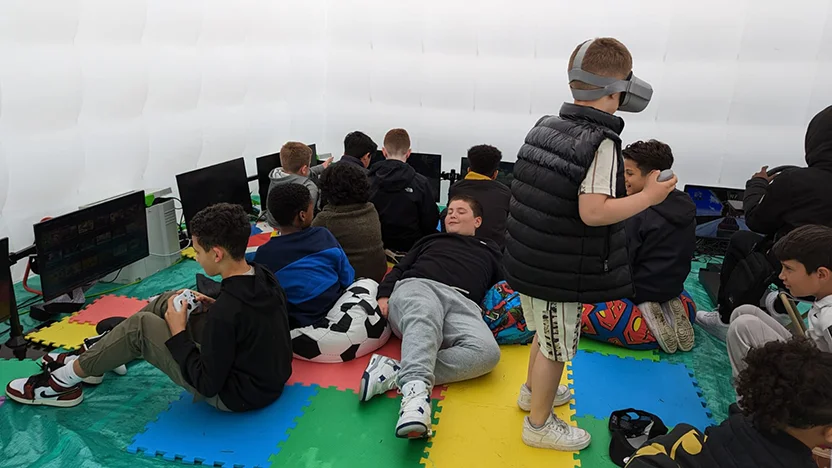
At Home and Away Gaming, we’re passionate about delivering unforgettable experiences for children through our gaming party services, but we also know the value of traditional outdoor and group play. Whether it’s digital or unplugged fun, the goal is always the same—bringing joy, laughter, and connection to kids’ lives.







Get ready to play your heart out! Unlock a world of gaming wonders.

Other Link
Support